Healthcare Data Centers: The Next Evolution in Patient Care
Greece’s €255 million healthcare digitalization initiative requires specialized data centers to enable AI diagnostics and real-time monitoring across 237 facilities, addressing interoperability challenges while improving patient outcomes in a system serving diverse geographic regions.
- spotlight
- April 10, 2025
- 1:52 pm
- 0 comments

Chapter 1: Demystifying Healthcare Data Centers - A Primer
Q&A on the Building Blocks of Modern Healthcare IT
1. What exactly is a healthcare data center? A specialized facility designed to securely house, process, and manage sensitive medical data while ensuring compliance with regulations like HIPAA and GDPR. These centers differ from standard data centers through enhanced security, redundancy, and specialized health data protocols.
2. Why are data centers crucial for healthcare? They enable real-time patient monitoring, electronic health records, telemedicine, and AI-driven diagnostics that would be impossible with traditional infrastructure. In Greece, only 3% of chronic care patients are managed in practices with electronic medical record exchange capabilities, compared to the OECD average of 57%.
3. How do data centers impact patient outcomes? By allowing instant access to complete patient histories, enabling faster diagnoses, reducing medical errors, and supporting preventive care through predictive analytics. This infrastructure is essential as Greece implements its first National Strategy for Quality of Care and Patient Safety 2025-2030.
4. What makes healthcare data centers unique? Their need for 99.999% uptime (less than 5 minutes downtime yearly), specialized compliance measures, and the ability to handle diverse healthcare-specific applications while maintaining strict data sovereignty requirements that protect sensitive patient information.
Chapter 2: Greece’s Healthcare Digital Landscape
Current Reality and Future Trajectory
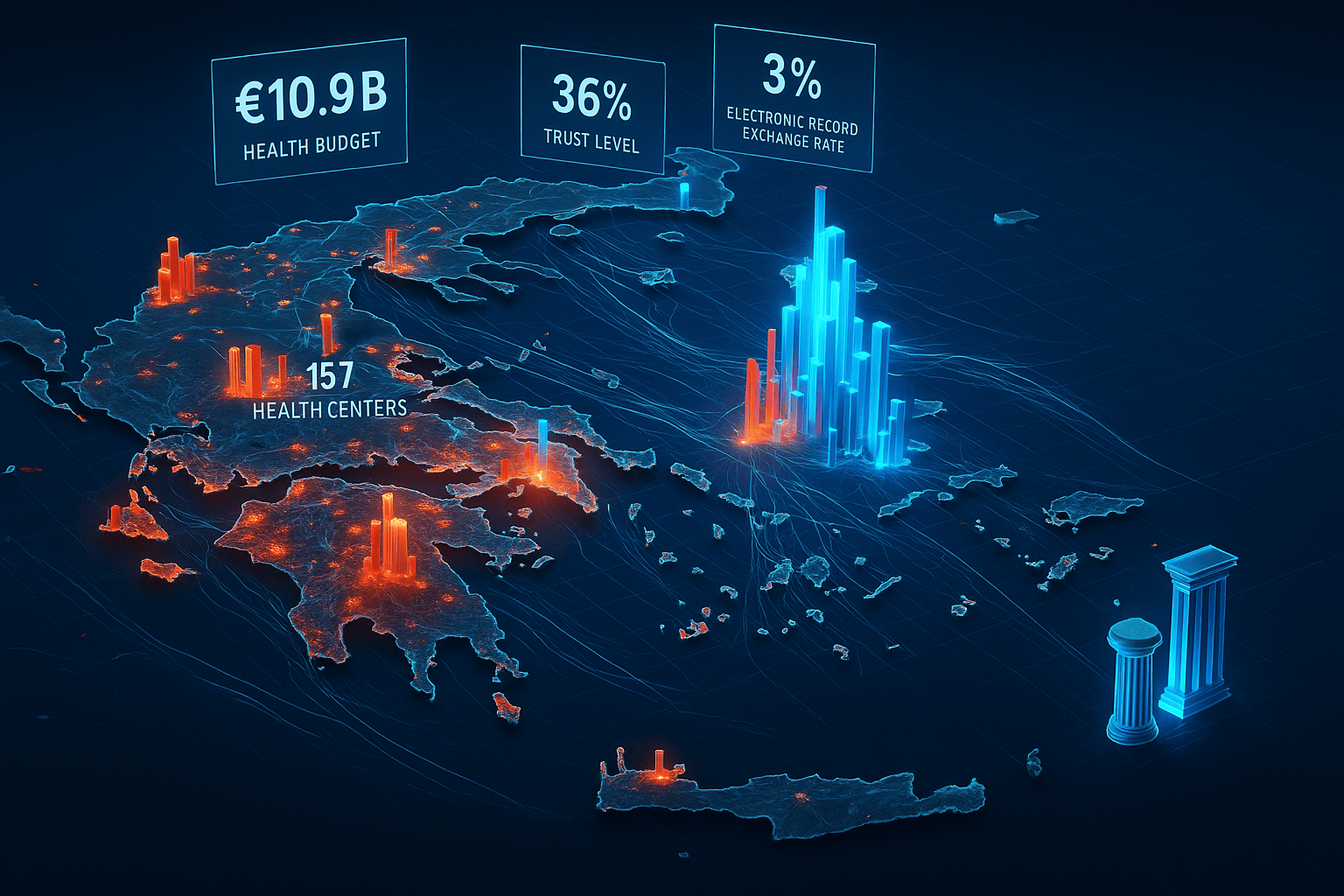
Greece’s healthcare system stands at a digital crossroads, with recent budgetary commitments highlighting a nationwide push toward modernization. The country’s €10.9 billion health expenditure (10.4% of total budget) includes significant digital transformation allocations aimed at bridging critical technology gaps. This investment comes at a crucial time, as only 36% of Greeks with chronic conditions trust the healthcare system, well below the OECD average of 62%.
The infrastructure challenges are substantial: despite having 130 general hospitals and specialized facilities, Greece faces severe electronic interoperability issues, with merely 3% of practices capable of exchanging medical records electronically. The government’s commitment to building and upgrading 157 health centers and 80 hospitals presents an unprecedented opportunity to embed advanced data center capabilities from the ground up.
With Greece’s economy projected to grow by 2.5% in 2025, and health expenditure expected to increase at a 4.2% annual rate, the foundation for healthcare technology transformation is firmly established. These investments position Greece to leverage specialized data centers as catalysts for improved patient outcomes and operational efficiency across the healthcare ecosystem.

Chapter 3: Architecting Healthcare-Specific Data Centers
Beyond Traditional IT Infrastructure
Healthcare data centers require specialized architectures that transcend traditional enterprise designs. In Greece, where healthcare digitization is accelerating, these facilities must accommodate the unique challenges of medical data processing while adhering to stringent compliance standards. The architecture must support real-time patient monitoring across the country’s 130 general hospitals and specialized facilities, providing the computational foundation for next-generation care.
These centers feature physical segmentation of networks to isolate patient data from administrative systems, reducing security vulnerabilities while enabling appropriate information sharing. Redundancy requirements exceed typical enterprise standards, with N+2 configurations ensuring continuous operation even during component failures. This redundancy is critical for supporting Greece’s ambitious plans to reduce medical errors through digital transformation.
Healthcare data center architecture must also accommodate the disparate data types generated throughout the patient journey, from high-resolution imaging studies to real-time monitoring streams. With Greece allocating €255 million specifically for healthcare digitalization, implementing architectures that enable seamless integration of these diverse data sources becomes paramount for delivering cohesive, patient-centered care while maximizing the return on this substantial national investment.
Chapter 4: Real-Time Patient Monitoring Infrastructure
The Technological Backbone of Continuous Care
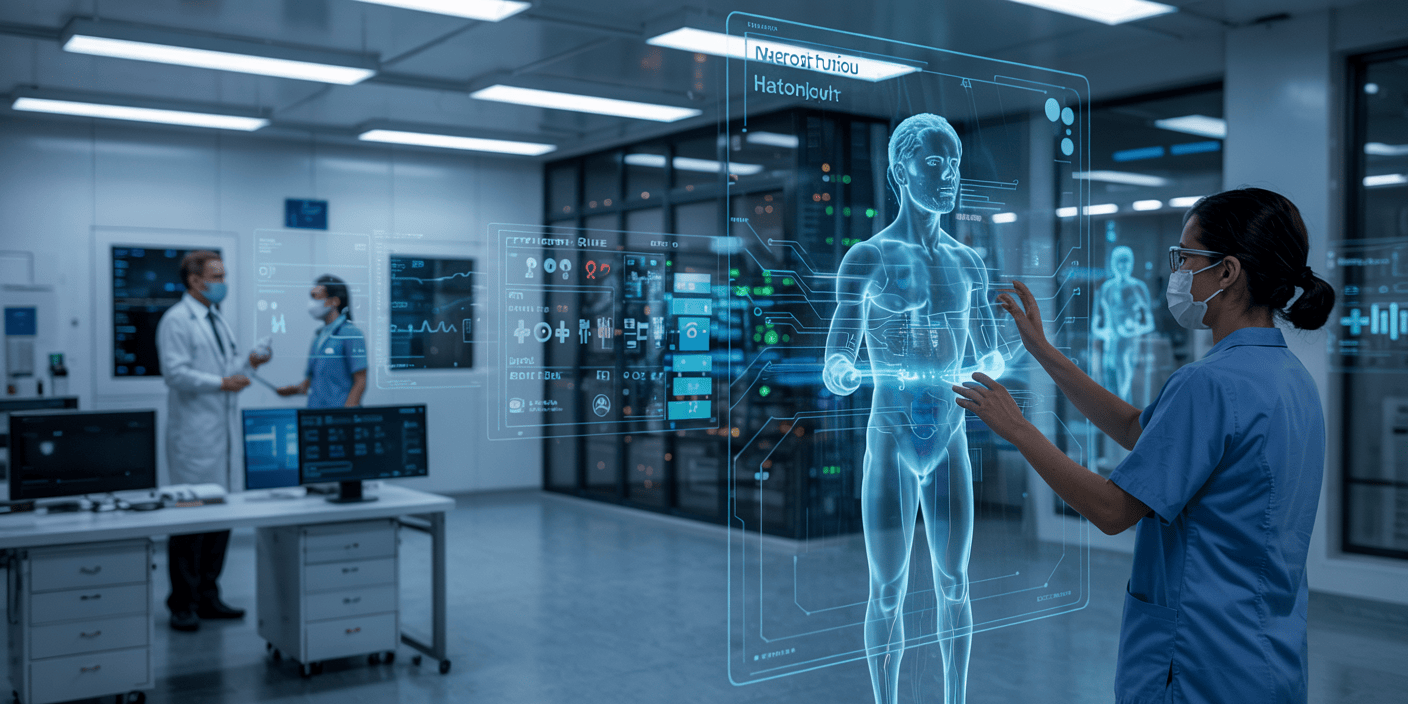
Real-time patient monitoring systems represent a transformative approach to healthcare delivery, particularly relevant for Greece’s geographically dispersed population. These systems rely on robust data center infrastructure to collect, process, and analyze continuous streams of patient data from remote locations. For Greece, where trust in healthcare remains below OECD averages (36% versus 62%), implementing reliable monitoring infrastructure could significantly improve patient confidence and clinical outcomes.
The underlying data center architecture must support millisecond-level data processing from thousands of concurrent monitoring devices while maintaining strict privacy controls. This requires specialized edge computing capabilities distributed strategically throughout Greece’s healthcare network, with central data repositories for analysis and long-term storage. Healthcare facilities can leverage systems like RealTime Location Solutions (RTLS) to track patients, staff, and equipment, optimizing clinical workflows while enhancing patient experiences.
Greece’s investment in upgrading 157 health centers provides an ideal opportunity to embed advanced monitoring infrastructure. By implementing these technologies, healthcare providers can achieve earlier intervention for deteriorating patients, reducing complications and potentially decreasing the overall €10.9 billion healthcare expenditure through more efficient resource utilization and preventive care approaches.
Chapter 5: AI-Driven Diagnostics Computing Requirements
Processing Power for Clinical Intelligence
The computational demands of AI-driven diagnostics are reshaping healthcare data center requirements across Greece. These advanced algorithms require specialized processing capabilities beyond traditional infrastructure, particularly for analyzing medical imaging, genomic data, and complex biometric information. As Greece invests in healthcare modernization, purpose-built computational environments for AI diagnostics represent a critical component of the country’s €255 million digital transformation initiative.
These environments typically employ high-performance GPU clusters optimized for deep learning frameworks, supported by high-bandwidth, low-latency interconnects that enable real-time analysis of patient data. The storage architecture must accommodate both the massive training datasets required for AI model development and the continuous influx of new patient information. With Greece’s health expenditure projected to reach 10.7% of GDP by 2027, investments in AI-optimized data centers can significantly enhance diagnostic accuracy while potentially reducing overall healthcare costs.
For Greece’s healthcare providers, particularly those managing chronically ill patients, AI-driven diagnostics offer substantial benefits. Early detection algorithms can identify subtle deterioration patterns before they become clinically apparent, addressing a critical gap in Greece’s current healthcare delivery where early intervention opportunities are often missed due to infrastructure limitations.

Chapter 6: Data Integration Challenges and Solutions
Creating a Unified Health Information Ecosystem
Greece’s healthcare system faces significant data integration challenges, evidenced by the fact that only 3% of practices can exchange medical records electronically, compared to the OECD average of 57%. This fragmentation hinders comprehensive patient care and limits the effectiveness of clinical decision-making. Modern healthcare data centers must overcome these integration barriers by implementing standardized data exchange protocols and unified storage architectures.
The Fast Healthcare Interoperability Resources (FHIR) standard represents the foundation for effective healthcare data integration, enabling secure exchange of clinical information across disparate systems. For Greece’s healthcare providers, implementing FHIR-compliant data platforms within their data center architecture establishes the technical foundation for seamless information sharing. This approach aligns with Greece’s National Strategy for Quality of Care and Patient Safety 2025-2030, which emphasizes improved coordination of care.
Effective data integration also requires sophisticated identity management systems that ensure patient information remains accurately linked across different care settings. By addressing these integration challenges through purpose-built data center architectures, Greece can overcome the current trust deficit in its healthcare system while enabling more coordinated, efficient care delivery that leverages the country’s substantial €10.9 billion health expenditure more effectively.
Chapter 7: Future-Proofing Healthcare Data Infrastructure
Building for Tomorrow’s Medical Innovations
As Greece commits to healthcare modernization with plans to upgrade 157 health centers and 80 hospitals, forward-thinking data center design becomes essential for long-term success. Future-proof healthcare data infrastructure must anticipate expanding data volumes, emerging technologies, and evolving regulatory requirements. Greece’s projected economic growth of 2.5% in 2025 provides an opportunity to invest in adaptive data center architectures that will accommodate tomorrow’s healthcare innovations.
Modular design principles enable incremental capacity expansion without disrupting existing operations, particularly important as Greece works to increase digital adoption across its healthcare system. Incorporating renewable energy solutions, similar to GRNET’s “green” data center on river Louros, which achieves unprecedented energy efficiency for Greek standards, addresses both sustainability goals and long-term operational costs.
The foundation for future healthcare technologies lies in creating flexible computing environments that can adapt to emerging requirements like genomic medicine, advanced imaging, and personalized treatment protocols. By implementing predictive maintenance systems that monitor infrastructure health in real-time, Greek healthcare providers can achieve the reliability necessary for critical care applications while maximizing their return on technology investments. This approach aligns with Greece’s broader goals of healthcare modernization while addressing the current 36% trust deficit in its healthcare system.