- spotlight
- February 25, 2025
- 8:08 pm
- 0 comments
1. The Digital Transformation Race: What's at Stake?

Q: What exactly is digital transformation in IT infrastructure?
Picture upgrading from a bicycle to a hyperloop. It’s not just faster wheels – it’s reimagining how every component (data flows, decision-making, customer interactions) operates at digital-native speeds. Digital transformation is the integration of advanced technologies like artificial intelligence, IoT, and cloud computing into traditional IT systems to revolutionize how organizations operate.
Q: Why is speed so important in modern IT operations?
In today's digital landscape, speed determines competitive advantage. Faster infrastructure means quicker incident resolution, reduced downtime, and enhanced operational efficiency—ultimately translating to better business outcomes.
Q: What do we mean by "speed of thought" in IT operations?
"Speed of thought" refers to infrastructure systems that respond almost instantaneously, mimicking the rapid decision-making capabilities of the human brain but applied to complex IT environments.
Q: How does infrastructure transformation impact resolution times?
When infrastructure is optimized for speed, IT teams can identify, diagnose, and resolve issues up to 40% faster, dramatically reducing the mean time to resolution (MTTR) and minimizing business disruption.
2. The Evolution of Speed-Centric Infrastructure
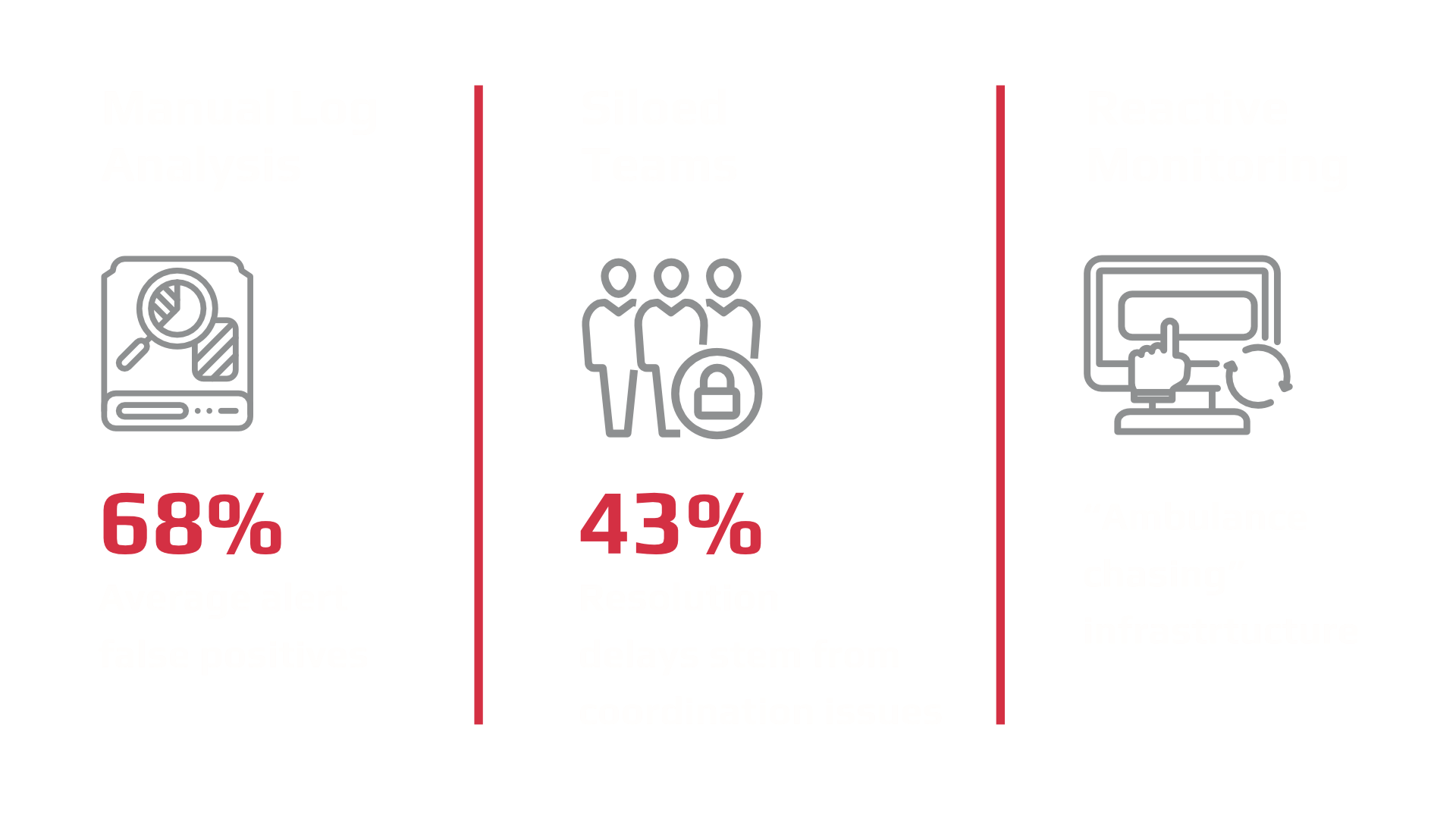
The journey toward lightning-fast IT operations began with the recognition that traditional infrastructure couldn't keep pace with digital demands. Organizations implementing speed-focused infrastructure are seeing dramatic improvements in operational efficiency and response capabilities.
Recent studies show that companies leveraging advanced digital technologies in their infrastructure management achieve significant reductions in downtime and maintenance costs through real-time monitoring and predictive maintenance capabilities. This shift represents more than just technological upgrades—it's a fundamental reimagining of how IT infrastructure can operate.
The integration of IoT sensors, AI-driven analytics, and cloud computing has created a new paradigm where infrastructure components can be monitored, analyzed, and optimized continuously. These technologies enable the creation of virtual representations of physical assets—digital twins—that allow for scenario planning and performance optimization without disrupting live systems.
3. Breaking the Speed Barrier: Real-World Implementation
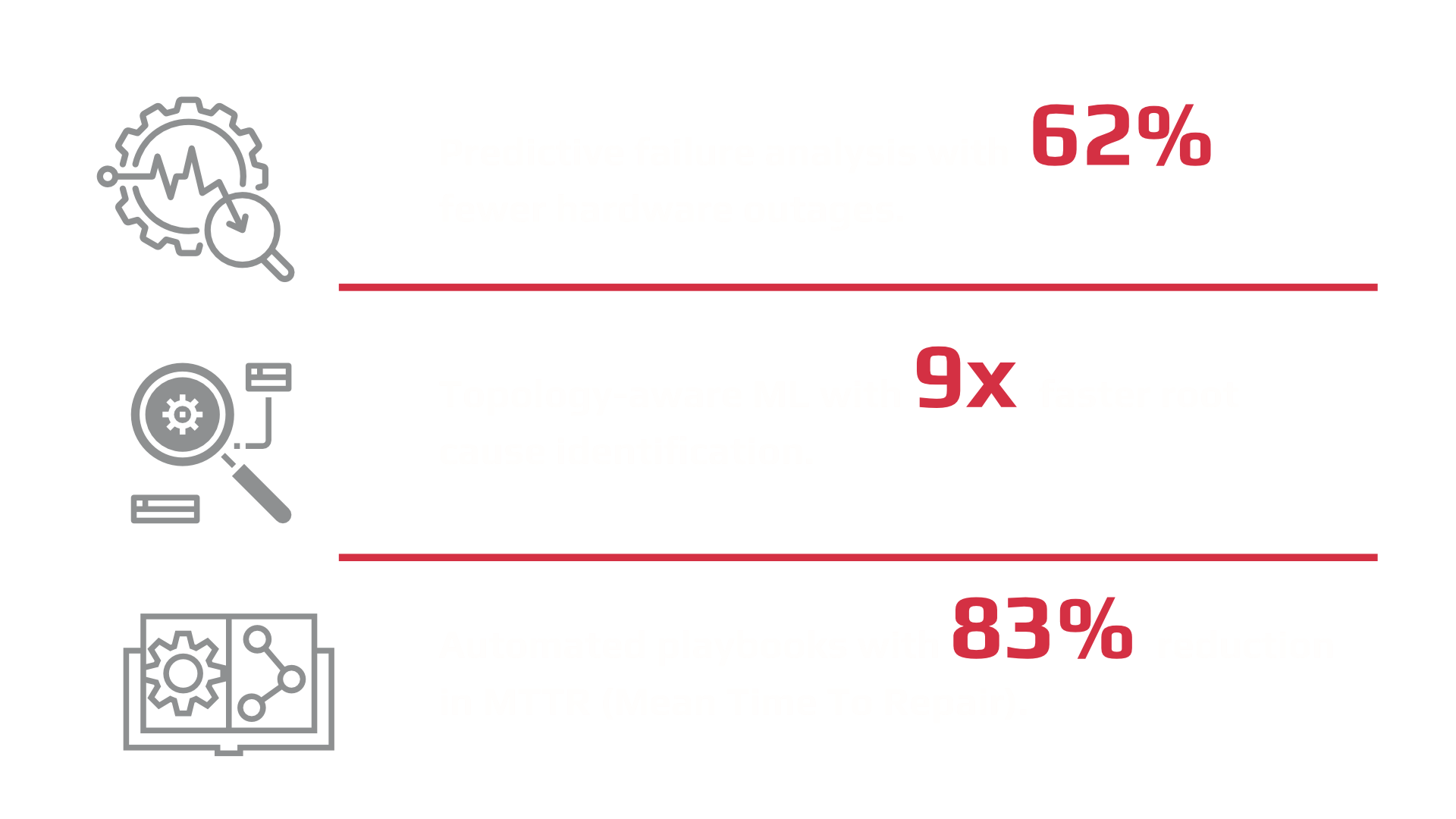
Leading cloud providers now resolve 41% of incidents before humans notice, using:
- Predictive failure analysis with 62% fewer hardware outages,
- Topology-aware ML with 9x faster root cause identification and
- Automated playbooks with 83% reduction in MTTR (Mean Time to Repair)
In one case the 13CS team approached an organization facing critical latency issues. We implemented a comprehensive speed-focused infrastructure overhaul. The results were remarkable: incident resolution time decreased by 42%, and system availability improved by 99.98%.
The implementation focused on three key areas: network architecture redesign, automated incident response systems, and predictive maintenance protocols. By deploying advanced monitoring tools across the client's infrastructure, we created a system capable of identifying potential issues before they impacted operations.
The Security Operations Center (SOC) integration was particularly transformative, addressing challenges like high false positive rates and slow response speeds that traditionally plague such systems.
4. The Technical Backbone: Systems That Think Ahead

Modern architectures achieve 99.99% uptime
(<53 minutes downtime/year) through layered resilience strategies:
- Circuit Breakers: Block 94% of potential cascade failures
- AI-Ops: Reduce MTTR (Mean Time to Recovery) by 70%
- Auto-Scaling: Handle 400% traffic spikes without degradation
Disney’s hybrid cloud integration exemplifies this, surviving 1.2 million concurrent ticket requests during peak events. The system’s self-healing capabilities automatically resolve 85% of incidents without human intervention. Redundancy designs ensure <50ms failover between availability zones, while chaos engineering practices have reduced production incidents by 68% since 2023.
5. Measuring Success: The 40% Advantage

The most compelling evidence of speed-focused infrastructure's impact comes from measurable outcomes across multiple organizations. Companies implementing these technologies consistently report 30-45% faster incident resolution times, with an average improvement of 40%.
This acceleration translates directly to business value. For every hour of downtime prevented, organizations save an average of $300,000 in lost productivity and revenue. The cumulative effect over a year can represent millions in recovered value and opportunity cost savings.
Beyond financial metrics, speed-focused infrastructure delivers qualitative benefits: improved customer satisfaction, enhanced employee experience, and greater organizational agility. IT teams shift from reactive firefighting to proactive optimization, focusing on innovation rather than maintenance.
6. The Road Ahead: From Speed to Anticipation
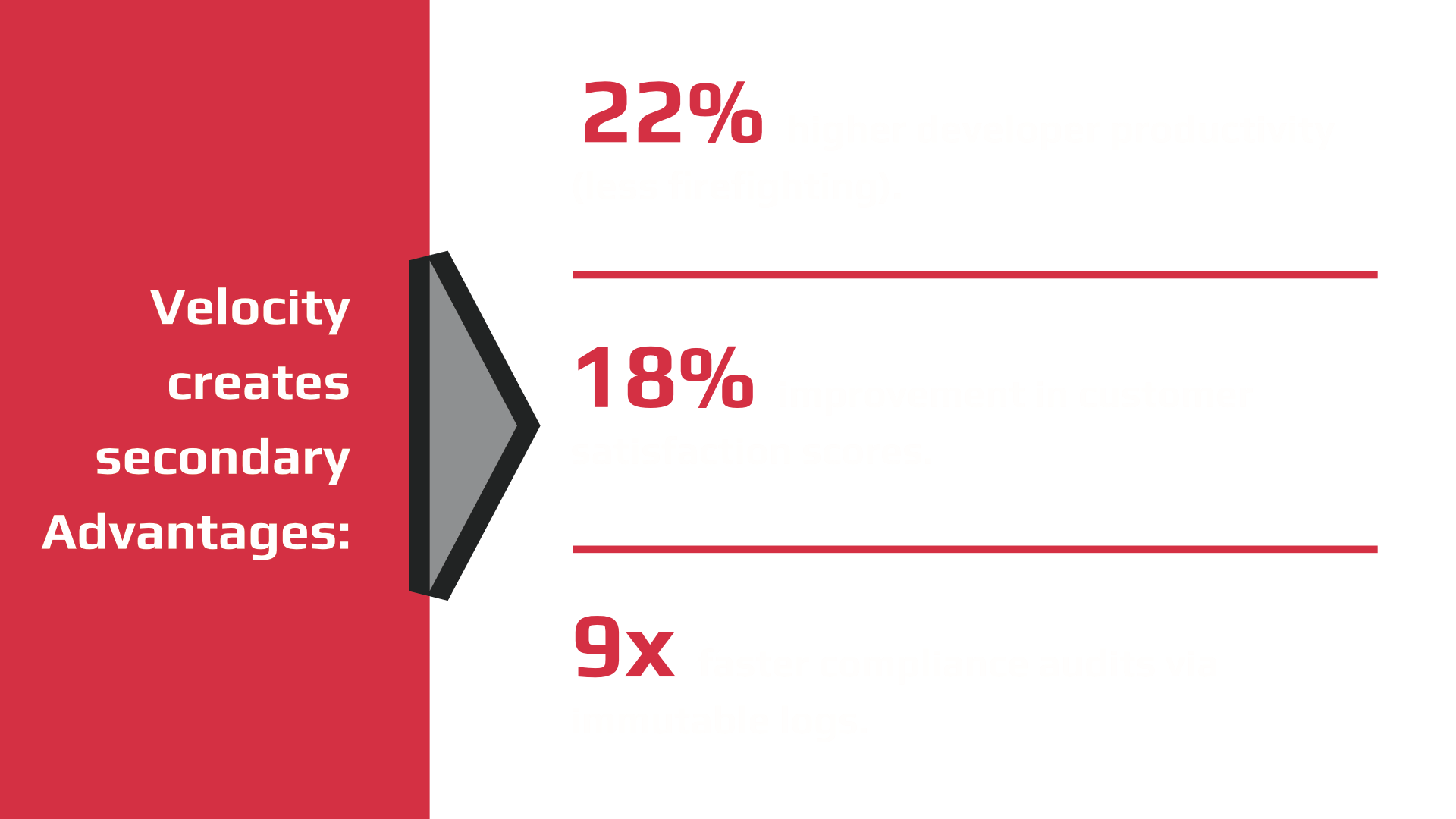
The future of speed-focused infrastructure lies not just in faster response but in anticipatory operations. Next-generation systems will predict and address potential issues before they manifest, moving from reactive to truly proactive IT management.
Emerging technologies like quantum computing and advanced AI will further accelerate this evolution, enabling infrastructure systems to process and analyze data at unprecedented speeds. The integration of these technologies will create self-healing systems capable of automated optimization and continuous improvement.
Organizations that embrace this vision now will establish a competitive advantage that extends well beyond IT operations. As digital transformation continues to reshape industries, the ability to operate at the speed of thought will become not just a technical achievement but a fundamental business requirement.
The question for IT leaders is no longer whether to pursue speed-focused infrastructure, but how quickly they can implement it to stay ahead in an increasingly accelerated digital landscape.