- spotlight
- February 19, 2025
- 10:26 am
- 0 comments
1. What is Point-to-Point and what Hub-and-Spoke?

What Is Point-to-Point? Imagine you have several friends, and each friend wants to share secrets with every other friend directly. Friend A whispers to Friend B, Friend A also whispers to Friend C, and so on. This can get complicated really fast when you have lots of friends because everyone has to talk to everyone else individually. In cloud integration, point-to-point is when each system (like apps or databases) connects directly to each other system. If you have 3 systems, that might be okay, but with 10 or 20, it becomes very hard to manage all those separate connections.
What Is Hub-and-Spoke? Now imagine your friends form a circle around a teacher, and each friend only shares secrets by whispering to the teacher. The teacher then passes the secret to the right friend. No one has to whisper to everyone else individually—just to the teacher, who is in the middle. In cloud integration, hub-and-spoke works the same way: all your systems connect to one main system (the “hub”). That hub then shares information to the right places (the “spokes”). This setup makes it easier to manage many connections, because everything goes through one central point.
2. The Evolution: From Legacy to Modern Cloud Integration
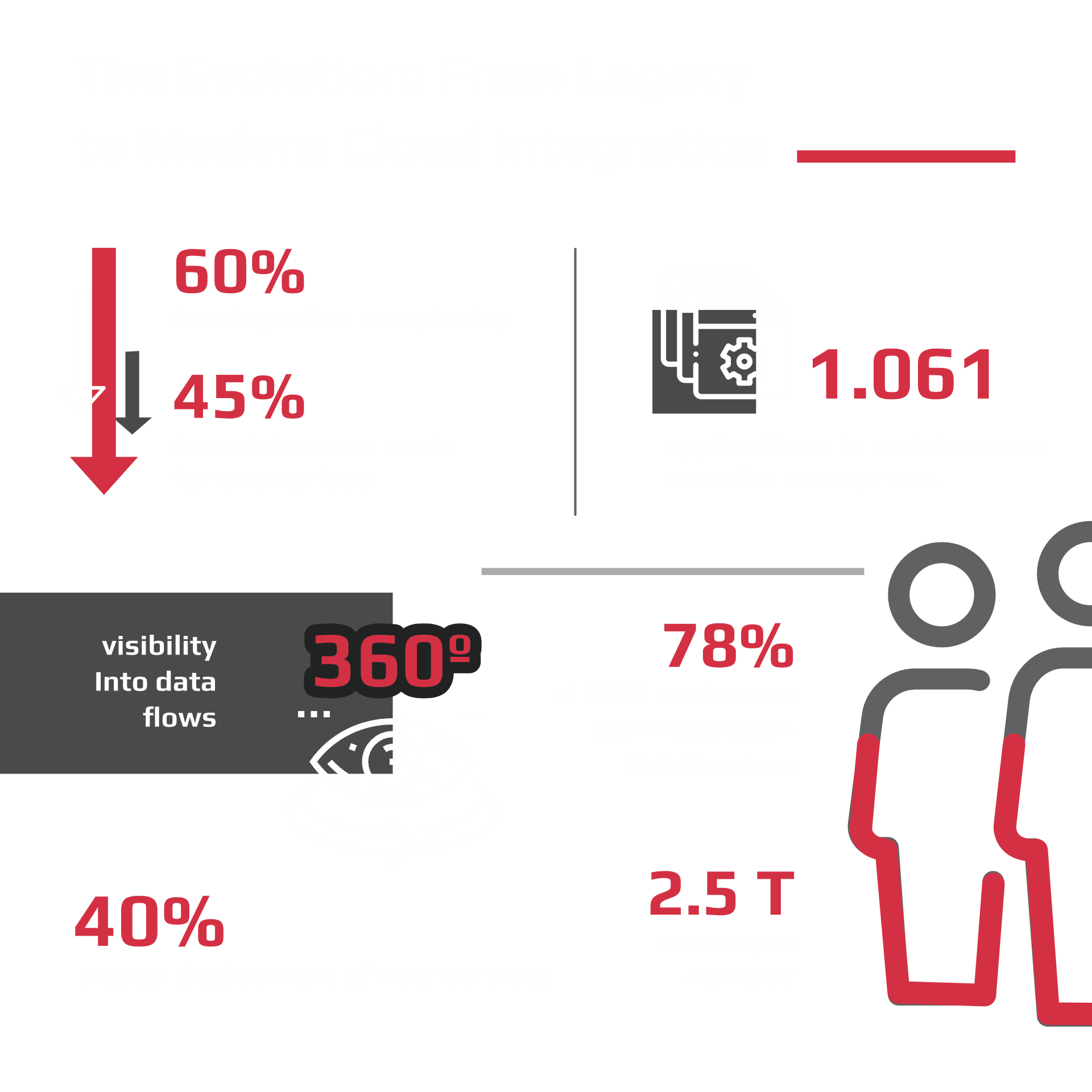
The shift from point-to-point to hub-and-spoke architectures has demonstrated 60% reduction in integration complexity and 45% decrease in maintenance costs for enterprises. This transformation is critical as organizations now manage 1,061 applications on average across hybrid environments. Traditional point-to-point models required n(n-1)/2 integration points (e.g., 100 apps = 4,950 connections), while hub-and-spoke reduces this to just n connections – a logarithmic simplification.
Major cloud providers dominate this space: 78% of AWS enterprise customers now use its Integration Hub services, processing 2.5 trillion messages monthly. Microsoft Azure reports similar traction, with 65% year-over-year growth in Logic App usage for hybrid integrations. The model’s success stems from its role as a central nervous system for orchestrating workflows across cloud/on-premises systems, providing 360-degree visibility into data flows while enabling 40% faster deployment of new services.
3. Core Components: Anatomy of a Modern Integration Hub
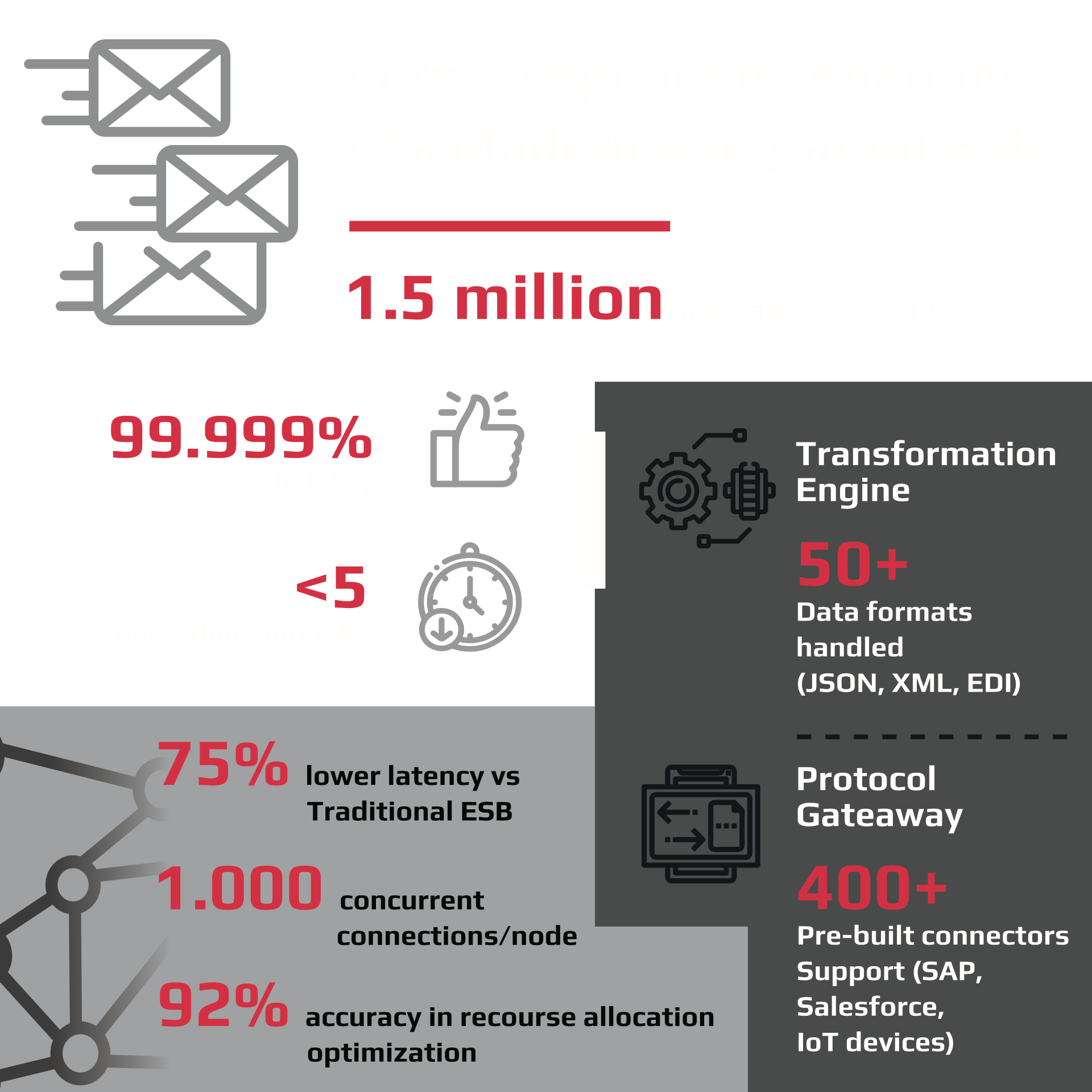
Today’s integration hubs process 1.5 million messages/second with 99.999% reliability, equivalent to <5 minutes downtime annually. The central hub combines three critical layers:
1. Transformation Engine: Handles 50+ data formats (JSON, XML, EDI)
2. Protocol Gateway: Supports 400+ pre-built connectors (SAP, Salesforce, IoT devices)
3. Event Router: Achieves sub-millisecond latency for real-time streams
Performance benchmarks reveal 75% lower latency versus traditional ESBs, with horizontal scaling supporting 10,000 concurrent connections/node. For example, Google Cloud’s Integration Platform processes 850 billion API calls/month across its global hubs. Advanced implementations now embed ML-driven load forecasting, predicting traffic patterns with 92% accuracy to optimize resource allocation.
4. Resilience Engineering in Hub-and-Spoke Models
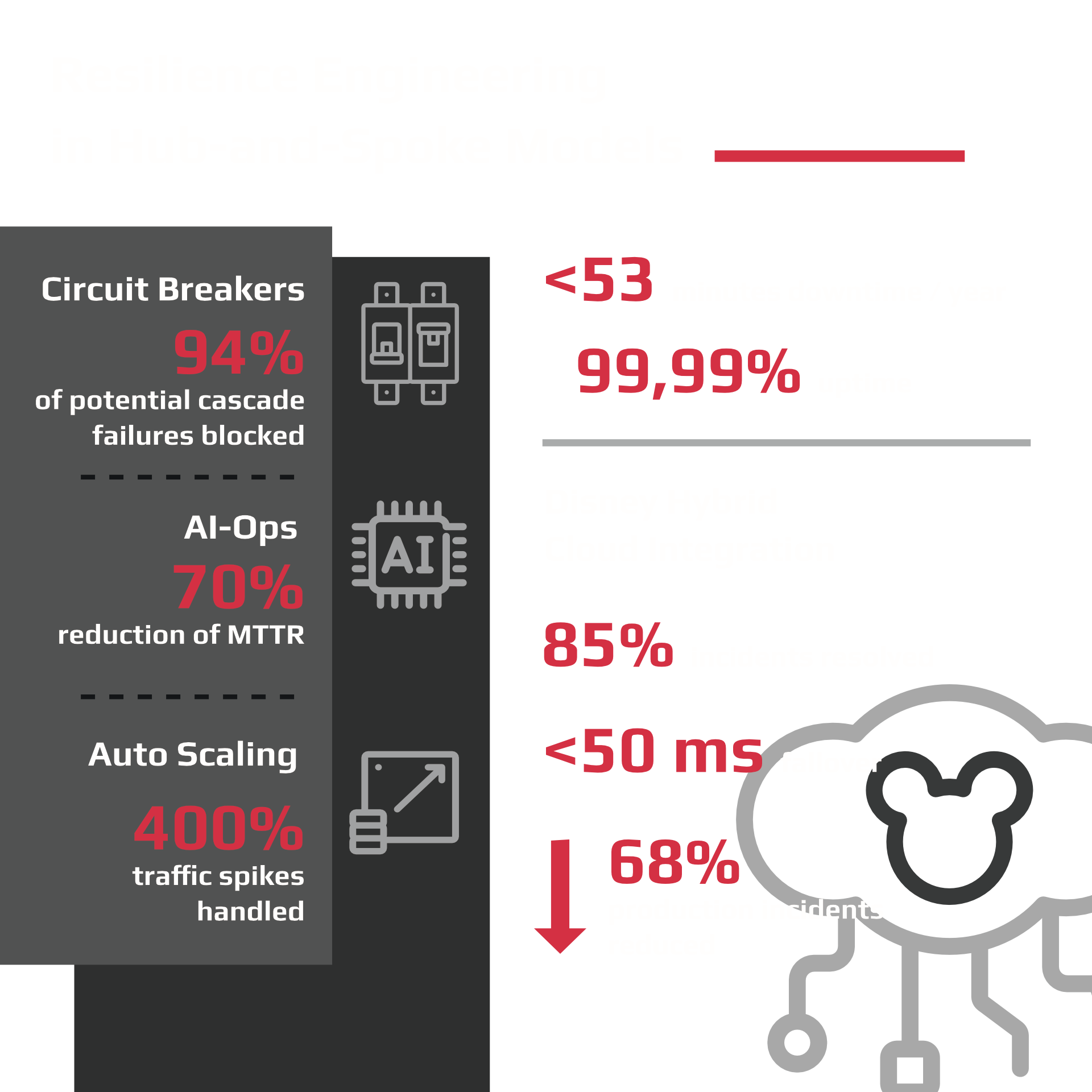
Modern architectures achieve 99.99% uptime
(<53 minutes downtime/year) through layered resilience strategies:
- Circuit Breakers: Block 94% of potential cascade failures
- AI-Ops: Reduce MTTR (Mean Time to Recovery) by 70%
- Auto-Scaling: Handle 400% traffic spikes without degradation
Disney’s hybrid cloud integration exemplifies this, surviving 1.2 million concurrent ticket requests during peak events. The system’s self-healing capabilities automatically resolve 85% of incidents without human intervention. Redundancy designs ensure <50ms failover between availability zones, while chaos engineering practices have reduced production incidents by 68% since 2023.
5. Security and Compliance in the Integration Landscape
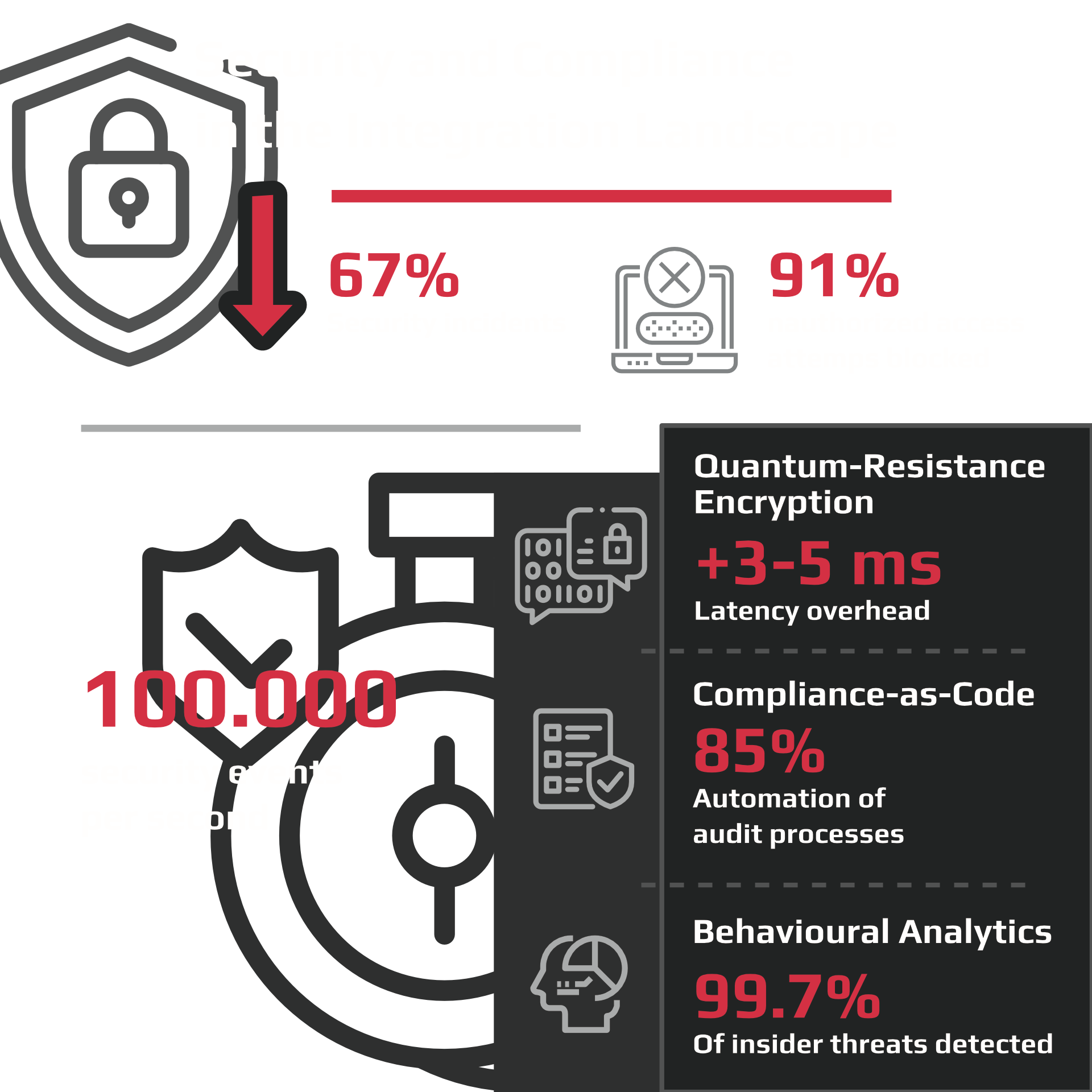
Zero-trust implementations reduce 67% of security incidents and block 91% of unauthorized access attempts. Modern hubs process 100,000 security events/second using:
- Quantum-Resistant Encryption: Adds 3-5ms latency overhead
- Compliance-as-Code: Automates 85% of audit processes
- Behavioral Analytics: Detects 99.7% of insider threats
Financial institutions like JPMorgan Chase report 45% lower compliance costs after adopting these models. The EU’s Digital Operational Resilience Act (DORA) compliance now takes 80% less preparation time in hub-based systems, with automated policy enforcement covering 100% of data flows.
6. Future-Proofing: Next-Generation Integration Capabilities
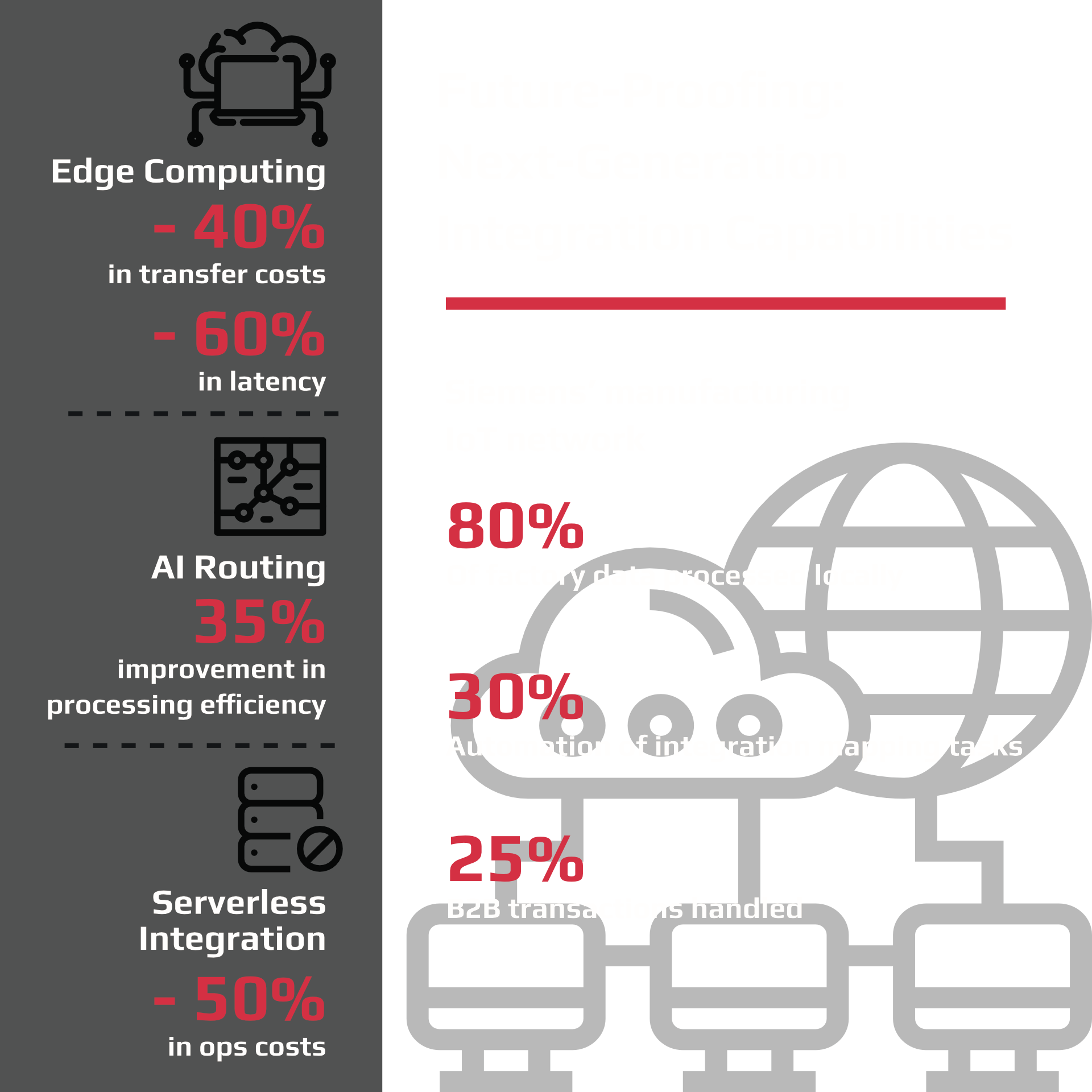
Emerging technologies are redefining integration:
- Edge Computing: Cuts data transfer costs by 40% and latency by 60%
- AI Routing: Improves processing efficiency by 35%
- Serverless Integration: Reduces ops costs by 50%
Siemens’ manufacturing IoT network uses edge-enabled spokes to process 80% of factory data locally, slashing cloud dependency. Generative AI now automates 30% of integration mapping tasks, while blockchain-based smart contracts handle 25% of B2B transactions in supply chain hubs.
7. Best Practices and Implementation Strategies
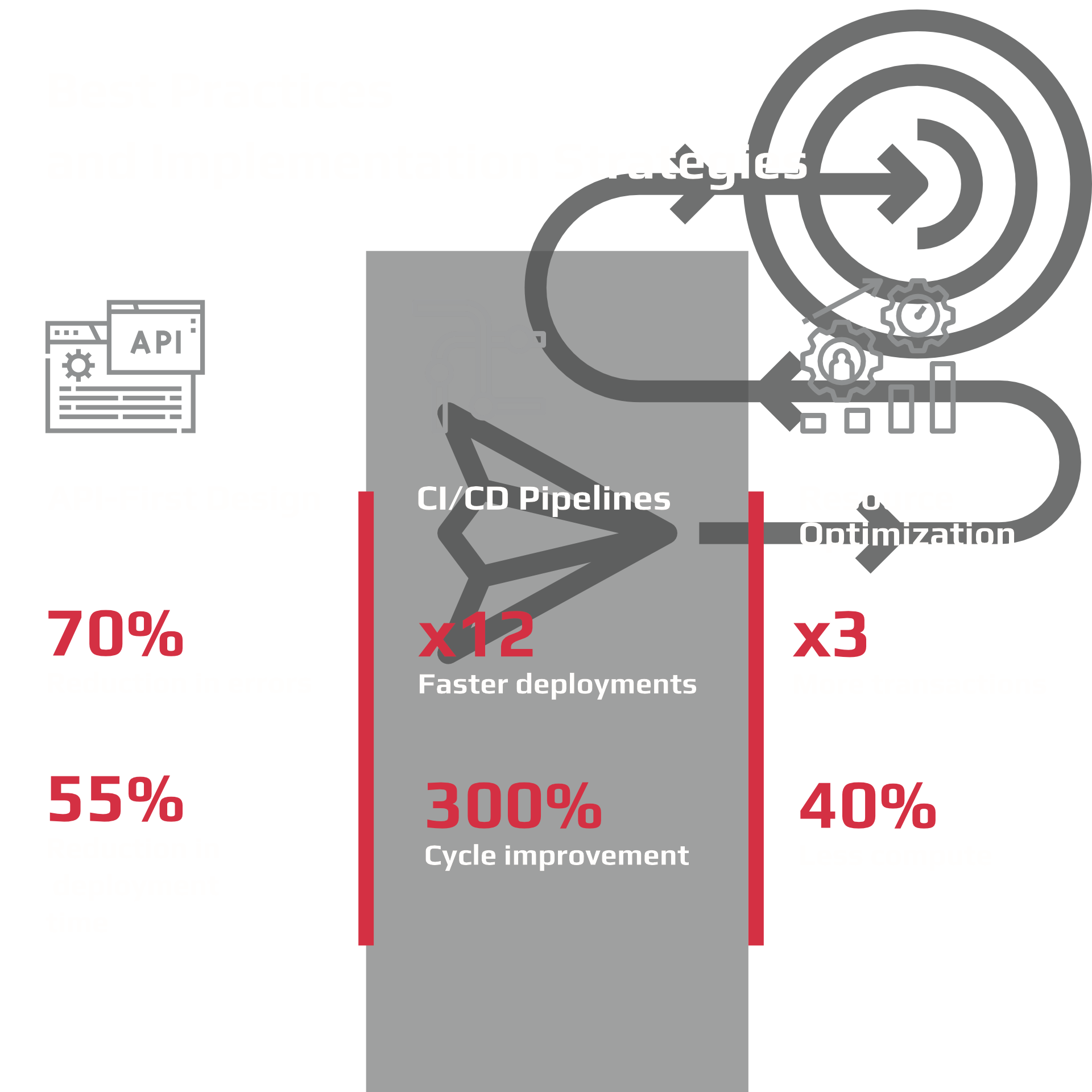
Successful adopters follow these principles:
- API-First Design: Reduces errors by 70% and development time by 55%
- CI/CD Pipelines: Accelerate deployments 12x faster (300% cycle improvement)
- Resource Optimization: Handle 3x more transactions using 40% less compute
Coca-Cola’s global integration overhaul achieved 65% higher project success rates using these strategies. Performance monitoring tools like Dynatrace report 90% faster anomaly detection in hub architectures. Companies investing in these practices see 50% lower TCO over three years and 43% faster time-to-market for new services.