NIS2 Directive: The 13CS Guide to EU Cybersecurity Compliance
Explore comprehensive NIS2 compliance strategies for organizations of all sizes. 13CS delivers actionable insights on risk management, incident reporting, and infrastructure resilience, empowering executives to transform regulatory requirements into cybersecurity excellence across critical sectors.
- spotlight
- April 2, 2025
- 1:30 pm
- 0 comments

Chapter 1: Understanding NIS2 - Your Questions Answered
Demystifying the EU’s Enhanced Cybersecurity Framework
Q: What exactly is the NIS2 Directive?
A: NIS2 (Directive 2022/2555) is the European Union’s updated cybersecurity framework that replaces the original NIS Directive, establishing higher security standards across 18 critical sectors. It mandates risk management measures, incident reporting, and holds leadership accountable.
Q: When does NIS2 take effect?
A: Member States had until October 17, 2024, to transpose the directive into national law, with organizations having up to 21 months afterward to achieve full compliance. Many implementations will continue through 2025.
Q: Who falls under NIS2’s scope?
A: The directive applies to medium and large entities in critical sectors, typically with 50+ employees or €10+ million annual turnover. Organizations are categorized as either “essential” or “important” entities based on their sector and size.
Q: What are the penalties for non-compliance?
A: Fines can reach up to €10 million or 2% of global annual revenue for essential entities and up to €7 million or 1.4% for important entities. Management can also face personal liability.
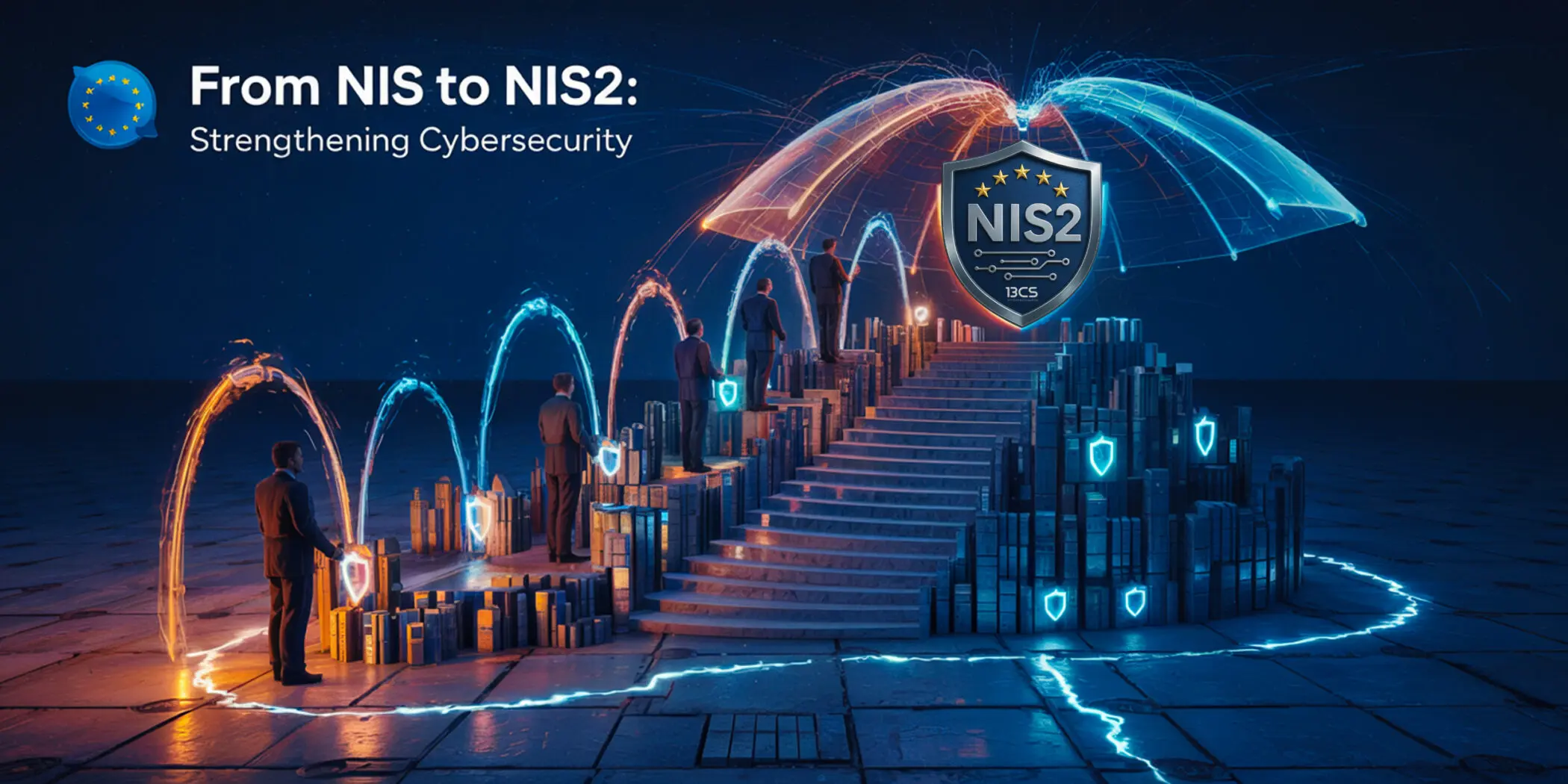
Chapter 2: The Evolution from NIS1 to NIS2: Why This Matters Now
Understanding the Expanding Cybersecurity Landscape
The original NIS Directive established the EU’s first cybersecurity framework, but growing digital threats and fragmented implementation necessitated a stronger approach. NIS2 significantly expands both scope and requirements, including essential sectors like energy, transport, and healthcare while adding new ones such as waste management, manufacturing, and public administration. The directive also brings social platforms and space into its protective umbrella.
What makes NIS2 particularly impactful is its transformation of cybersecurity from an IT concern to a board-level priority. Senior leadership now bears direct responsibility for compliance, with potential personal liability for breaches. This accountability shift means executives must understand and actively oversee cybersecurity risk management—no longer can these responsibilities be delegated solely to technical teams.
With cyber incidents surging 16% in 2024 and critical infrastructure attacks increasing 30% since 2022, this heightened focus couldn’t be more timely. Organizations now face the dual challenge of implementing robust technical measures while restructuring governance to meet these new expectations.

Chapter 3: Who Falls Under NIS2 Scope: Is Your Organization Affected?
Identifying Your Organization’s Classification and Obligations
NIS2 introduces a two-tier classification system that determines compliance requirements and potential penalties. “Essential Entities” include organizations with over 250 employees or €50 million annual turnover in sectors like energy, transport, banking, healthcare, drinking water, digital infrastructure, and public administration. These face the strictest requirements and highest penalties.
“Important Entities,” while subject to somewhat less stringent oversight, still face significant obligations. This category includes organizations with over 50 employees or €10 million annual turnover in sectors such as postal services, waste management, chemicals, food production, manufacturing, and digital providers.
Data center operators are specifically designated as “essential” regardless of size due to their critical infrastructure role. This classification acknowledges the central importance of data centers in supporting virtually every sector of the modern economy.
Special consideration is given to entities covered by the Critical Entities Resilience (CER) directive, which fall under NIS2 regardless of size. This cross-reference between regulatory frameworks demonstrates the EU’s comprehensive approach to critical infrastructure protection.

Chapter 4: The Critical Components of NIS2 Compliance
Essential Requirements and Implementation Priorities
NIS2 compliance centers around four fundamental pillars: comprehensive risk management, leadership accountability, incident reporting, and business continuity planning. Organizations must implement technical measures addressing risks across their entire digital ecosystem, including supply chain security, network protection, access controls, and encryption.
The incident reporting framework establishes an aggressive timeline: initial notification within 24 hours of detection, an intermediate report within 72 hours, and a comprehensive final report within one month. This three-phase approach ensures authorities receive timely information while allowing organizations to provide more detailed analysis as investigations progress.
Risk management requirements demand a proactive approach, including extensive risk assessments, implementation of preventative measures, and establishing a risk governance framework that integrates cybersecurity into business operations. Organizations must conduct regular testing and implement 24/7 monitoring of critical systems.
Member States will establish supervisory frameworks with national authorities empowered to conduct audits, request information, and issue binding instructions. Documentation of compliance measures becomes essential, as authorities can review policies, procedures, and evidence of their implementation during investigations.

Chapter 5: Building Resilience: Beyond Basic Compliance
Transforming Regulatory Requirements into Strategic Advantages
Successful NIS2 implementation requires transcending checkbox compliance to embrace a resilience-centered approach. Organizations should view the directive as an opportunity to transform their security posture, developing programs that protect critical assets while enabling business innovation and continuity. This means integrating cybersecurity considerations into every aspect of operations and decision-making.
Implementing a risk-based approach is fundamental, requiring organizations to identify, assess, and prioritize risks based on potential business impact. This involves conducting comprehensive risk assessments, implementing multi-layered preventative measures like multi-factor authentication and encryption, and establishing a governance framework that aligns cybersecurity with business objectives.
Software quality emerges as a crucial pillar of NIS2 compliance, with the directive emphasizing secure development practices and supply chain integrity. Organizations must embed cybersecurity controls throughout the software development lifecycle while also implementing robust vulnerability management programs. High-quality, secure software serves as the foundation for operational resilience against evolving threats.
Enhanced incident detection and response capabilities are essential, with organizations required to implement continuous monitoring, establish clear incident response procedures, and conduct regular drills to test readiness. These capabilities not only satisfy regulatory requirements but also minimize business impact when incidents occur.

Chapter 6: The 13CS Approach to NIS2 Implementation
Our Proven Methodology for Cybersecurity Excellence
At 13CS, we’ve developed a proven methodology that transforms NIS2 compliance into a strategic advantage. As systems integrators with extensive experience building secure infrastructures, we understand the technical and organizational challenges organizations face. Our approach begins with a comprehensive assessment that maps your current security controls against NIS2 requirements, identifying gaps and prioritizing actions based on risk and impact.
Our data center expertise provides a unique perspective on securing critical infrastructure. With 13CS managing 30% of operational costs in the first year and accelerating project delivery by 60%, our clients achieve both compliance and operational excellence. We implement 24/7 monitoring systems, establish incident response frameworks, and design resilient architectures that support business continuity during disruptions.
The 13CS implementation process incorporates leading technologies while emphasizing the human element of cybersecurity. We provide specialized training for executives and technical teams, ensuring everyone understands their roles in maintaining compliance. This comprehensive approach results in 40% faster issue resolution and significantly improved security postures across our client organizations.
By partnering with 13CS, organizations gain access to our deep expertise in EU cybersecurity requirements and industry best practices. Our integration capabilities enable seamless deployment of security controls across complex environments, while our proactive management approach ensures continuous compliance as requirements evolve.

Chapter 7: Future-Proofing Your Infrastructure: The Road Ahead
Maintaining Compliance in an Evolving Landscape
The implementation of NIS2 represents not an endpoint but the beginning of a continuous cybersecurity journey. As threat landscapes evolve and regulatory interpretations mature, organizations must develop adaptable frameworks that respond to changing requirements while maintaining operational effectiveness. 13CS recommends establishing a three-year roadmap that progressively enhances capabilities, beginning with baseline compliance and advancing toward security excellence.
Year one should focus on aligning current systems with NIS2 requirements, mapping existing cybersecurity practices to specific directives, and implementing essential governance structures. Organizations should prioritize addressing high-risk gaps while establishing the foundations for long-term compliance management.
Looking further ahead, organizations should prepare for increasing regulatory convergence across frameworks like GDPR, DORA, and the CER directive. This harmonization trend requires developing comprehensive governance models that address multiple requirements simultaneously, reducing compliance overhead while enhancing protection. 13CS’s strategic planning approach helps clients navigate these intersecting requirements efficiently.
The ultimate goal extends beyond compliance to achieving true cyber resilience—the ability to maintain critical functions despite disruptions. By implementing robust risk management, continuous monitoring, and adaptive security architectures, organizations can transform NIS2 compliance into a strategic advantage that supports business objectives while protecting essential assets.
Κουίζ μίας ερώτησης για το NIS2