2025’s Cybersecurity Framework: A CTO’s Blueprint
The 2025 cybersecurity landscape demands a multi-layered approach combining NIST 2.0 framework with physical security, AI-powered monitoring, and cloud-specific controls to protect data center assets from increasingly sophisticated threats.
- spotlight
- April 25, 2025
- 12:16 pm
- 0 comments

Chapter 1: Understanding the Cybersecurity Landscape for Data Centers
Q&A: The Essential Terminology
Q: What is a cybersecurity framework?
A: A cybersecurity framework is a structured set of guidelines, best practices, and standards designed to help organizations protect their digital assets from threats. These frameworks provide a systematic approach to identifying, assessing, and managing cybersecurity risks.
Q: Why are frameworks especially important for data centers?
A: Data centers house critical infrastructure and sensitive data, making them prime targets for cyber attacks. Frameworks offer a comprehensive security approach addressing both physical and digital vulnerabilities unique to these environments.
Q: How are cloud security needs different from traditional data centers?
A: Cloud environments face distinct challenges including shared responsibility models, multi-tenancy risks, and distributed security controls. Modern frameworks must address these while maintaining visibility across hybrid infrastructures.
Q: What makes 2025’s security landscape different?
A: The integration of AI technologies, increased regulatory requirements, and the evolution of sophisticated threats have transformed the security landscape, requiring more adaptive and comprehensive frameworks.
Chapter 2: NIST Cybersecurity Framework 2.0 - The New Gold Standard
Evolution and Expansion for the Modern Enterprise
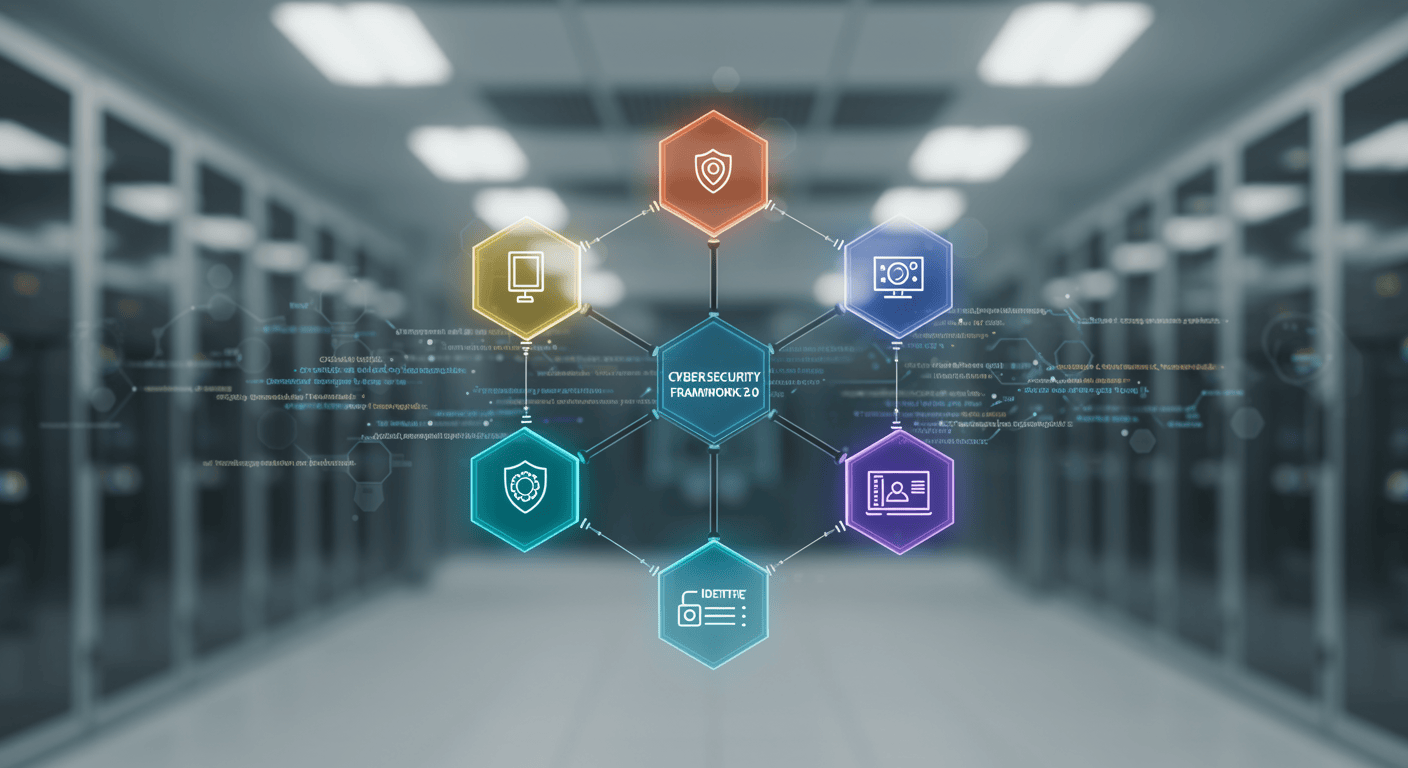
The NIST Cybersecurity Framework has evolved significantly with its 2.0 update, released in February 2024. This framework now extends beyond critical infrastructure to serve organizations of all sizes, from small schools to large corporations. The most notable addition is a sixth core function—Govern—joining the established Identify, Protect, Detect, Respond, and Recover functions. This new component recognizes cybersecurity as an essential aspect of enterprise risk management, positioning it alongside financial and reputational considerations.
NIST 2.0 offers a holistic approach designed to resonate with those responsible for operationalizing risk management. The framework’s technology-neutral approach provides flexibility for organizations to address their unique risks while aligning with international standards. With its quick-start guides, success stories, and searchable catalog of references, NIST 2.0 has established itself as the gold standard for assessing cybersecurity maturity and meeting regulatory requirements.

Chapter 3: Essential Frameworks Beyond NIST for Comprehensive Coverage
A Multi-Framework Approach for Robust Protection
While NIST 2.0 provides a comprehensive foundation, several other frameworks offer complementary approaches essential for a robust security posture. ISO/IEC 27001 remains the international gold standard for Information Security Management Systems (ISMS), emphasizing systematic risk management processes and providing global recognition that enhances client trust. For organizations seeking focused control implementation, the CIS Controls (Version 8) offers prioritized actions to mitigate the most prevalent attack vectors.
COBIT 2019 bridges the gap between technical IT issues and business risks, making it particularly valuable for enterprises needing to align cybersecurity with governance objectives. For data centers handling financial information, PCI DSS provides specific requirements to protect payment card data. The SOC 2 framework addresses service organizations’ controls relevant to security, availability, and confidentiality—critical factors for data centers offering managed services.

Chapter 4: Data Center Physical Security - The First Line of Defense
Emerging Threats Require Evolving Protections
Physical security represents the critical first layer in a comprehensive data center protection strategy. By 2025, data centers are increasingly being recognized as critical infrastructure by governments worldwide, requiring enhanced protection measures. Modern data centers face unique physical threats including copper theft, supply chain interception, and even violent crimes targeting valuable hardware components.
Advanced security measures now include biometric authentication systems with facial recognition and fingerprint scanning, replacing traditional access cards. Surveillance has evolved to incorporate AI-powered analytics that can detect anomalous behaviors before breaches occur. As data centers expand into “data center villages,” security teams must adapt to protecting larger, more complex environments with perimeter detection systems and coordinated response protocols. The consequences of physical security failures extend beyond immediate losses, potentially triggering cascading operational disruptions, legal consequences, and reputational damage that many businesses cannot survive.

Chapter 5: Cloud Security Compliance in the Distributed Era
Navigating the Complex Regulatory Landscape
Cloud security compliance has become increasingly challenging as regulations multiply across jurisdictions. By 2025, organizations face a fragmented regulatory environment with 76% of CISOs reporting compliance challenges across different regions. A staggering statistic reveals that 99% of cloud breaches will result from misconfigurations, primarily due to human error, highlighting the critical importance of robust security frameworks and automation.
The threat landscape has shifted dramatically, with machine identities now outnumbering human identities by 40,000 times and posing 7.5 times greater security risk. Nearly 40% of breaches originate from credential exploitation, underscoring the need for comprehensive identity management strategies. Organizations must implement multi-factor authentication, least privilege access principles, encryption, and automated compliance tools to maintain security in cloud environments. As cloud adoption accelerates, security teams must balance innovation with protection, ensuring data sovereignty while enabling the scalability that drives competitive advantage.

Chapter 6: AI-Powered Security - Threat Intelligence and Response
Leveraging Artificial Intelligence for Proactive Protection
The integration of AI into cybersecurity represents a transformative shift in how organizations protect their digital assets. Sysdig’s 2025 Cloud-Native Security report reveals a dramatic 500% surge in AI and machine learning package use over the past year, demonstrating the rapid adoption of these technologies for security purposes. This AI revolution has contributed to significant improvements in threat detection and response capabilities, with security teams now able to detect threats in under 5 seconds and respond within an average of 3.5 minutes—well under the 10-minute window attackers have historically exploited.
AI-powered security tools are particularly valuable in cloud environments where infrastructure is dynamic and short-lived. With 60% of containers existing for less than one minute, traditional security approaches fall short. AI systems can continuously monitor these ephemeral resources, analyzing patterns to identify anomalies and potential breaches before damage occurs. By automating correlation of threat data across disparate systems, AI enables security teams to focus on the most critical vulnerabilities rather than drowning in alerts.

Chapter 7: The CTO’s Implementation Roadmap for 2025 and Beyond
From Strategy to Execution
As a CTO navigating the complex cybersecurity landscape of 2025, your implementation strategy must begin with thoroughly understanding your organization’s business objectives and risk tolerance. This foundation allows you to translate business goals into security priorities, ensuring alignment between technical controls and enterprise risk management. Adopting a systematic approach based on the NIST CSF 2.0’s six functions—Govern, Identify, Protect, Detect, Respond, and Recover—provides a comprehensive structure for your security program.
Implementation should focus on building layers of defense spanning physical security, cloud infrastructure, and endpoint protection. Authenticate all system interactions through robust identity management and incorporate zero-trust principles that verify every access request regardless of source. Shield sensitive data through encryption both at rest and in transit, and develop incident response plans with clearly defined recovery point and time objectives. Regular testing through simulated attacks ensures these plans remain effective against evolving threats.